This is default featured slide 1 title

Go to Blogger edit html and find these sentences.Now replace these sentences with your own descriptions.This theme is Bloggerized by Lasantha Bandara - Premiumbloggertemplates.com.

This is default featured slide 2 title

Go to Blogger edit html and find these sentences.Now replace these sentences with your own descriptions.This theme is Bloggerized by Lasantha Bandara - Premiumbloggertemplates.com.

This is default featured slide 3 title

Go to Blogger edit html and find these sentences.Now replace these sentences with your own descriptions.This theme is Bloggerized by Lasantha Bandara - Premiumbloggertemplates.com.

This is default featured slide 4 title

Go to Blogger edit html and find these sentences.Now replace these sentences with your own descriptions.This theme is Bloggerized by Lasantha Bandara - Premiumbloggertemplates.com.

This is default featured slide 5 title

Go to Blogger edit html and find these sentences.Now replace these sentences with your own descriptions.This theme is Bloggerized by Lasantha Bandara - Premiumbloggertemplates.com.

Rabu, 14 Maret 2018

Free Download Midnight Harmonies, or, Thoughts for the Season of Solitude and Sorrow, 1851, Octavius WinslowBy Octavius Winslow

Free Download Midnight Harmonies, or, Thoughts for the Season of Solitude and Sorrow, 1851, Octavius WinslowBy Octavius Winslow

As one of the book compilations to recommend, this Midnight Harmonies, Or, Thoughts For The Season Of Solitude And Sorrow, 1851, Octavius WinslowBy Octavius Winslow has some solid factors for you to review. This publication is very ideal with exactly what you require currently. Besides, you will certainly also love this publication Midnight Harmonies, Or, Thoughts For The Season Of Solitude And Sorrow, 1851, Octavius WinslowBy Octavius Winslow to read since this is among your referred publications to check out. When getting something new based on experience, entertainment, and also other lesson, you could utilize this publication Midnight Harmonies, Or, Thoughts For The Season Of Solitude And Sorrow, 1851, Octavius WinslowBy Octavius Winslow as the bridge. Starting to have reading routine can be gone through from different methods as well as from alternative sorts of books

Midnight Harmonies, or, Thoughts for the Season of Solitude and Sorrow, 1851, Octavius WinslowBy Octavius Winslow

Midnight Harmonies, or, Thoughts for the Season of Solitude and Sorrow, 1851, Octavius WinslowBy Octavius Winslow


Midnight Harmonies, or, Thoughts for the Season of Solitude and Sorrow, 1851, Octavius WinslowBy Octavius Winslow


Free Download Midnight Harmonies, or, Thoughts for the Season of Solitude and Sorrow, 1851, Octavius WinslowBy Octavius Winslow

How a concept can be got? By staring at the superstars? By visiting the sea and taking a look at the sea interweaves? Or by reviewing a publication Midnight Harmonies, Or, Thoughts For The Season Of Solitude And Sorrow, 1851, Octavius WinslowBy Octavius Winslow Everyone will have particular particular to acquire the motivation. For you who are dying of publications as well as always get the motivations from publications, it is really excellent to be below. We will show you hundreds compilations of guide Midnight Harmonies, Or, Thoughts For The Season Of Solitude And Sorrow, 1851, Octavius WinslowBy Octavius Winslow to check out. If you such as this Midnight Harmonies, Or, Thoughts For The Season Of Solitude And Sorrow, 1851, Octavius WinslowBy Octavius Winslow, you could likewise take it as yours.

If you really want actually obtain guide Midnight Harmonies, Or, Thoughts For The Season Of Solitude And Sorrow, 1851, Octavius WinslowBy Octavius Winslow to refer now, you have to follow this web page always. Why? Keep in mind that you require the Midnight Harmonies, Or, Thoughts For The Season Of Solitude And Sorrow, 1851, Octavius WinslowBy Octavius Winslow resource that will offer you appropriate expectation, do not you? By visiting this website, you have actually started to make new deal to always be current. It is the first thing you can begin to get all gain from being in a website with this Midnight Harmonies, Or, Thoughts For The Season Of Solitude And Sorrow, 1851, Octavius WinslowBy Octavius Winslow as well as various other collections.

The web link of the book that we offer here will certainly reveal you why you are in the best place. It does not need complex attributes to get understood this Midnight Harmonies, Or, Thoughts For The Season Of Solitude And Sorrow, 1851, Octavius WinslowBy Octavius Winslow That's very basic. If you have the belief to lead this publication, just do it. The soft file system that we offer from the accumulated books from the many nations makes you quickly to actually get guides that you browse.

After finishing this book, you can take the verdict regarding just what type of publication this is specifically. You could not feel remorse to obtain and read it up until ended up. Many individuals have proved it and they love this book so much. When they have actually read it currently, one remark regarding Midnight Harmonies, Or, Thoughts For The Season Of Solitude And Sorrow, 1851, Octavius WinslowBy Octavius Winslow is awesome. So, exactly how has to do with you? Have you began reading this publication? Finish it and make final thought of it. Begin it now and below.

Midnight Harmonies, or, Thoughts for the Season of Solitude and Sorrow, 1851, Octavius WinslowBy Octavius Winslow

  • Sales Rank: #13254805 in Books
  • Published on: 1851
  • Binding: Hardcover

Midnight Harmonies, or, Thoughts for the Season of Solitude and Sorrow, 1851, Octavius WinslowBy Octavius Winslow PDF
Midnight Harmonies, or, Thoughts for the Season of Solitude and Sorrow, 1851, Octavius WinslowBy Octavius Winslow EPub
Midnight Harmonies, or, Thoughts for the Season of Solitude and Sorrow, 1851, Octavius WinslowBy Octavius Winslow Doc
Midnight Harmonies, or, Thoughts for the Season of Solitude and Sorrow, 1851, Octavius WinslowBy Octavius Winslow iBooks
Midnight Harmonies, or, Thoughts for the Season of Solitude and Sorrow, 1851, Octavius WinslowBy Octavius Winslow rtf
Midnight Harmonies, or, Thoughts for the Season of Solitude and Sorrow, 1851, Octavius WinslowBy Octavius Winslow Mobipocket
Midnight Harmonies, or, Thoughts for the Season of Solitude and Sorrow, 1851, Octavius WinslowBy Octavius Winslow Kindle

Midnight Harmonies, or, Thoughts for the Season of Solitude and Sorrow, 1851, Octavius WinslowBy Octavius Winslow PDF

Midnight Harmonies, or, Thoughts for the Season of Solitude and Sorrow, 1851, Octavius WinslowBy Octavius Winslow PDF

Midnight Harmonies, or, Thoughts for the Season of Solitude and Sorrow, 1851, Octavius WinslowBy Octavius Winslow PDF

Selasa, 13 Maret 2018

PDF Download Hidden Heresy: Is Spiritualism Invading Adventist Churches Today?By Tom Mostert

PDF Download Hidden Heresy: Is Spiritualism Invading Adventist Churches Today?By Tom Mostert

As we say, guide that we provide in the connect to download is the soft documents types. So, it will certainly let you run out to seek for book. And now, to update our collection, Hidden Heresy: Is Spiritualism Invading Adventist Churches Today?By Tom Mostert as the most up to date book coming is provided. This is among the very best seller books that originate from a specialist author. Besides, the author has increase the package of the book to be much intriguing. It does not have to assume increasingly more to get every definition form this publication.

Hidden Heresy: Is Spiritualism Invading Adventist Churches Today?By Tom Mostert

Hidden Heresy: Is Spiritualism Invading Adventist Churches Today?By Tom Mostert


Hidden Heresy: Is Spiritualism Invading Adventist Churches Today?By Tom Mostert


PDF Download Hidden Heresy: Is Spiritualism Invading Adventist Churches Today?By Tom Mostert

We assume that you will be interested to review Hidden Heresy: Is Spiritualism Invading Adventist Churches Today?By Tom Mostert currently. This is a brand-new coming book from a really renowned writer in this globe. No complex policy, no difficult words, as well as no challenging sources. This publication will appertain sufficient for you. This reading material tends to be an everyday reading version. So, you can read it based upon your requirements. Reviewing to the end finished can give you the huge outcome. As what other people do, lots of that checked out a publication by surface could obtain the benefit completely.

When you are remaining in this type of setting, what you need to select is in fact Hidden Heresy: Is Spiritualism Invading Adventist Churches Today?By Tom Mostert This is sort of recommended soft data publication for your everyday analysis. It will be related to the necessity of your duties and also lessons. But, the means to clarify it for you or words chosen become exactly what you like to. Excellent book will not constantly indicate that words will certainly be so complicated therefore tough to recognize.

Related to this situation, you could actually have the moment to take Hidden Heresy: Is Spiritualism Invading Adventist Churches Today?By Tom Mostert as so as possible. Be just one of the excellent people who take this book likewise for resource. For guaranteeing you to obtain this publication, we will show how you could locate as well as get the soft data of it right here. Simply adhere to the web link that we offer as well as you can straight locate as well as make bargain to obtain this publication. This is only picked to get and wait in some tool that you bring anywhere or at home or workplace.

When many of them are still puzzled of how you can get this book, you have actually been right here. The ideal area to discover lots of book groups included Hidden Heresy: Is Spiritualism Invading Adventist Churches Today?By Tom Mostert It's so easy to obtain how this book is disclosed. You could just visit, look, and also find the title of the book that you want to get. Many books from lots of sources and also nations are presented. So, you may to visit other site to locate the specific books to have today.

Hidden Heresy: Is Spiritualism Invading Adventist Churches Today?By Tom Mostert

  • Sales Rank: #1769056 in Books
  • Brand: Brand: Pacific Pr Pub Assn
  • Published on: 2005-01-01
  • Original language: English
  • Number of items: 1
  • Dimensions: 8.90" h x .30" w x 5.90" l, .0 pounds
  • Binding: Paperback
  • 112 pages
Features
  • Used Book in Good Condition

Hidden Heresy: Is Spiritualism Invading Adventist Churches Today?By Tom Mostert PDF
Hidden Heresy: Is Spiritualism Invading Adventist Churches Today?By Tom Mostert EPub
Hidden Heresy: Is Spiritualism Invading Adventist Churches Today?By Tom Mostert Doc
Hidden Heresy: Is Spiritualism Invading Adventist Churches Today?By Tom Mostert iBooks
Hidden Heresy: Is Spiritualism Invading Adventist Churches Today?By Tom Mostert rtf
Hidden Heresy: Is Spiritualism Invading Adventist Churches Today?By Tom Mostert Mobipocket
Hidden Heresy: Is Spiritualism Invading Adventist Churches Today?By Tom Mostert Kindle

Hidden Heresy: Is Spiritualism Invading Adventist Churches Today?By Tom Mostert PDF

Hidden Heresy: Is Spiritualism Invading Adventist Churches Today?By Tom Mostert PDF

Hidden Heresy: Is Spiritualism Invading Adventist Churches Today?By Tom Mostert PDF

Selasa, 06 Maret 2018

PDF Ebook Game Development Essentials: Game Project Management

PDF Ebook Game Development Essentials: Game Project Management

Ending up being a good person can be seen from the hobby and also tasks to do daily. Lots of excellent tasks are finished. Yet, do you love to read guides? If you don't have any kind of wish to check out, it appears to be really absence of your best life. Checking out will certainly not just offer you much more expertise yet likewise give you the brand-new better thought and also mind. Several straightforward people constantly check out such a publication everyday to spare even couple of times. It makes them feel completed.

Game Development Essentials: Game Project Management

Game Development Essentials: Game Project Management


Game Development Essentials: Game Project Management


PDF Ebook Game Development Essentials: Game Project Management

Following the great habit will reveal the good habit, as well. When having a great friend that has reading habit, it is required for you to have that such routine. Well, even reviewing is really not your design, why do not you try it when? To attract you to love reading, we will offer Game Development Essentials: Game Project Management currently. Below this book has the tendency to be the most referred publication that many people review it.

By spending couple of times in a day to review Game Development Essentials: Game Project Management, some experiences as well as lessons will certainly be gotten. It will certainly not associate with exactly how you should or take the activities, but take the benefits of exactly how the lesson as well as impression t obtain. In this instance, this provided book really comes to be ideas for individuals as you. You will always need brand-new experience, will not you? However, sometimes you have no adequate money and time to undergo it. This is why, via this book, you can overcome the determination.

The link of the book that we offer right here will certainly reveal you why you remain in the best area. It doesn't require complicated functions to get known this Game Development Essentials: Game Project Management That's very basic. If you have the belief to lead this publication, just do it. The soft documents system that we provide from the accumulated publications from the many countries makes you easily to really obtain the books that you browse.

Based on some encounters of many individuals, it is in reality that reading this Game Development Essentials: Game Project Management can help them to make far better choice as well as provide more encounter. If you intend to be one of them, let's acquisition this publication Game Development Essentials: Game Project Management by downloading and install guide on web link download in this website. You could get the soft data of this publication Game Development Essentials: Game Project Management to download and install as well as put aside in your available electronic tools. What are you waiting for? Let get this book Game Development Essentials: Game Project Management online as well as read them in whenever and any sort of place you will review. It will not encumber you to bring hefty publication Game Development Essentials: Game Project Management inside of your bag.

Game Development Essentials: Game Project Management

  • Sales Rank: #6306801 in Books
  • Published on: 1700
  • Binding: Paperback

Game Development Essentials: Game Project Management PDF
Game Development Essentials: Game Project Management EPub
Game Development Essentials: Game Project Management Doc
Game Development Essentials: Game Project Management iBooks
Game Development Essentials: Game Project Management rtf
Game Development Essentials: Game Project Management Mobipocket
Game Development Essentials: Game Project Management Kindle

Game Development Essentials: Game Project Management PDF

Game Development Essentials: Game Project Management PDF

Game Development Essentials: Game Project Management PDF

Rabu, 21 Februari 2018

Download ScandalousBy Jenna Petersen

Download ScandalousBy Jenna Petersen

This book is one recommended book that can heal and deal with the time you have. Spare time is the best time to read a book. When there are no friends to talk with, this is better to utilize that time for reading. If you are being in the long waiting lists, this is also the perfect time to read or even being on an enjoyable trip. ScandalousBy Jenna Petersen can be a good friend; of course this simple book will perform as good as you think about.

ScandalousBy Jenna Petersen

ScandalousBy Jenna Petersen


ScandalousBy Jenna Petersen


Download ScandalousBy Jenna Petersen

Reading, what do you consider this word? Is this word straining you? With lots of tasks, obligations, and also activities, are you forced so much to do this specific task? Well, also lots of people consider that analysis is kind of boring task, it does not suggest that you must ignore it. Occasionally, you will certainly require times to invest to check out the book. Even it's just a book; it can be an extremely deserving as well as priceless point to have.

This is one of your much-loved books, right? That's true. If this is among them, you could start by reviewing page by page for this publication. The factors may not be so complex. We offer you a good publication that will not just motivate you but likewise show you truth life. When getting this book to review, it will be so different when you check out others. This is a new coming book that makes this world so shacked. For your life, you could get several alternatives and benefits form this ScandalousBy Jenna Petersen

Also you have the book to read just; it will certainly not make you feel that your time is really limited. It is not only concerning the time that could make you feel so desired to sign up with guide. When you have actually picked guide to check out, you can save the moment, also couple of time to constantly read. When you assume that the moment is not only for obtaining the book, you can take it right here. This is why we pertain to you to use the easy methods getting guide.

It is not only to provide you the very easy means but likewise to obtain guide is soft documents systems. This is the reason you could obtain guide immediately. By linking to internet, your chance to discover and get the ScandalousBy Jenna Petersen immediately. By clicking link that is proffered in this website, you can most likely to straight the book site. And, that's your time to get your favourite publication.

ScandalousBy Jenna Petersen

Katherine Fleming has lived her life without even a hint of indiscretion. So she is devastated to discover the nobleman she's engaged to has a secret he's kept from her: a wife! Suddenly Katherine's enmeshed in a scandal that has the ton buzzing—and forced to accept a most unconventional proposal from the notorious seducer Dominic Mallory, her faithless fiancé's brother… and precisely the sort of rake she has sworn to avoid!

Charming and dangerously sensual, Dominic has desired the stunning beauty from the first moment he spied her. Now, with Katherine's reputation in tatters, it's the ideal opportunity to bed her—though it will take wedding vows to do so. But can a rogue be reformed by the unleashed passion of a normally reserved lady? And can a marriage made for all the wrong reasons flame into the love match of the season?

  • Sales Rank: #2219496 in Books
  • Brand: Avon
  • Published on: 2005-09-27
  • Released on: 2005-09-27
  • Original language: English
  • Number of items: 1
  • Dimensions: 6.75" h x .96" w x 4.19" l,
  • Binding: Mass Market Paperback
  • 384 pages
Features
  • Great product!

About the Author

Two of Jenna Petersen's childhood dreams wereto be a ballerina and a baseball player. Those didn't work out,but she's pleased to be following another childhood dream,writing books for a living. And what better than romance,where dreams come true on every page? Jenna lives in centralIllinois with her high school sweetheart husband andtwo taskmaster cats. She loves to hear from readers.

ScandalousBy Jenna Petersen PDF
ScandalousBy Jenna Petersen EPub
ScandalousBy Jenna Petersen Doc
ScandalousBy Jenna Petersen iBooks
ScandalousBy Jenna Petersen rtf
ScandalousBy Jenna Petersen Mobipocket
ScandalousBy Jenna Petersen Kindle

ScandalousBy Jenna Petersen PDF

ScandalousBy Jenna Petersen PDF

ScandalousBy Jenna Petersen PDF

Selasa, 13 Februari 2018

Download Culture in the Age of Three WorldsBy Michael Denning

Download Culture in the Age of Three WorldsBy Michael Denning

Numerous ready-books to read are provided in this site. We, as online collection site will constantly provide newer or late update of books from many nations worldwide. It will lead you to alleviate our means to seek for the alternative kinds of books. Without going abroad, without investing much loan, as well as without investing much time end up being some benefits of taking books from this site. And below, a Culture In The Age Of Three WorldsBy Michael Denning is among the most up to date publication is welcome.

Culture in the Age of Three WorldsBy Michael Denning

Culture in the Age of Three WorldsBy Michael Denning


Culture in the Age of Three WorldsBy Michael Denning


Download Culture in the Age of Three WorldsBy Michael Denning

Why must select the hassle one if there is simple? Obtain the profit by buying the book Culture In The Age Of Three WorldsBy Michael Denning below. You will certainly obtain different means making a deal and obtain guide Culture In The Age Of Three WorldsBy Michael Denning As understood, nowadays. Soft file of guides Culture In The Age Of Three WorldsBy Michael Denning end up being popular amongst the users. Are you among them? And also below, we are supplying you the new compilation of ours, the Culture In The Age Of Three WorldsBy Michael Denning.

Well, what concerning you who never read this kind of book? This is your time to start recognizing and also reading this kind of book category. Never ever doubt of the Culture In The Age Of Three WorldsBy Michael Denning that we offer. It will bring you to the truly new life. Even it doesn't imply to the real new life, we're sure that your life will certainly be much better. You will additionally locate the brand-new things that you never get from the other resources.

So, even you require commitment from the business, you may not be confused more since publications Culture In The Age Of Three WorldsBy Michael Denning will certainly constantly assist you. If this Culture In The Age Of Three WorldsBy Michael Denning is your finest partner today to cover your task or job, you can as quickly as possible get this publication. How? As we have actually informed previously, just check out the link that we offer here. The verdict is not only guide Culture In The Age Of Three WorldsBy Michael Denning that you hunt for; it is exactly how you will obtain many books to sustain your skill as well as capability to have piece de resistance.

Are you interested? Simply locate the book now and also obtain what you call as motivation. Inspirations could come with various topics and systems. The knowledge, experience, facts, as well as home entertainment will certainly become parts of the motivations. This publication, Culture In The Age Of Three WorldsBy Michael Denning, has that fantastic ideas that the writer makes to remind you about guide content. It additionally showcases the outstanding features of a book to get while in every reading state.

Culture in the Age of Three WorldsBy Michael Denning

Over the last half of the twentieth century, culture moved to the foreground of political and intellectual life. Suddenly everyone discovered that culture had been mass produced like Ford’s cars; the masses had culture and culture had a mass. Culture was everywhere, no longer the property of the cultured or the cultivated. Radical social movements around the globe invented a politics of culture.

Culture In the Age of Three Worlds is a reflection on this cultural turn which was a fundamental aspect of the age of three worlds, that short half century between 1945 and 1989 when it was imagined that the world was divided into three—the capitalist first world, the communist second world, and the decolonizing third world. Recasting the legacies of British cultural studies and the radical traditions of the American studies movement in a global context, Michael Denning explores the political and intellectual battles over the meanings of culture, addresses the rise of a distinctive ‘American ideology,’ and charts the lineaments of the global cultures that emerged as three worlds gave way to one.

  • Sales Rank: #1235538 in Books
  • Brand: Brand: Verso
  • Published on: 2004-02-26
  • Released on: 2004-02-17
  • Original language: English
  • Number of items: 1
  • Dimensions: 8.50" h x .60" w x 5.40" l, .93 pounds
  • Binding: Paperback
  • 224 pages
Features
  • Used Book in Good Condition

Review
"An immense achievement ... the most important book yet written on American culture in the age of the CIO." -- Michael Rogin on The Cultural Front "A fresh and methodologically pathbreaking look at popular or mass-cultural narrative and its ideological function in a specific formative period of North American modernity." -- Fredric Jameson on Mechanic Accents

About the Author
Michael Denning teaches American Studies at Yale University. He is the author of Mechanic Accents, Cover Stories, Culture in the Age of Three Worlds, and The Cultural Front.

Culture in the Age of Three WorldsBy Michael Denning PDF
Culture in the Age of Three WorldsBy Michael Denning EPub
Culture in the Age of Three WorldsBy Michael Denning Doc
Culture in the Age of Three WorldsBy Michael Denning iBooks
Culture in the Age of Three WorldsBy Michael Denning rtf
Culture in the Age of Three WorldsBy Michael Denning Mobipocket
Culture in the Age of Three WorldsBy Michael Denning Kindle

Culture in the Age of Three WorldsBy Michael Denning PDF

Culture in the Age of Three WorldsBy Michael Denning PDF

Culture in the Age of Three WorldsBy Michael Denning PDF

Senin, 12 Februari 2018

Free Download Harry Potter y la piedra filosofal

Free Download Harry Potter y la piedra filosofal

Actually, this is not a force for you to enjoy this publication as well as read up until finish this publication. We show you the superb book. It will certainly be so pity if you miss it. This is not the correct time for you to miss out on the Harry Potter Y La Piedra Filosofal not to review. It could aid you not only satisfying this holiday times. After vacations, you will certainly obtain something brand-new. Yeah, this book will really lead you to life much better. This is why; this advised book is much said for you who intend to move on always.

Harry Potter y la piedra filosofal

Harry Potter y la piedra filosofal


Harry Potter y la piedra filosofal


Free Download Harry Potter y la piedra filosofal

Dear readers, when you are searching the new book collection to read this day, Harry Potter Y La Piedra Filosofal can be your referred book. Yeah, also many books are used, this publication could swipe the reader heart a lot. The material and also motif of this publication truly will touch your heart. You could locate more and more experience and also knowledge exactly how the life is undertaken.

Presents currently this Harry Potter Y La Piedra Filosofal as one of your book collection! But, it is not in your bookcase collections. Why? This is guide Harry Potter Y La Piedra Filosofal that is given in soft file. You can download and install the soft file of this amazing book Harry Potter Y La Piedra Filosofal currently and in the web link supplied. Yeah, different with the other people who look for book Harry Potter Y La Piedra Filosofal outside, you can get easier to present this book. When some individuals still stroll right into the shop as well as look guide Harry Potter Y La Piedra Filosofal, you are below just remain on your seat as well as get guide Harry Potter Y La Piedra Filosofal.

The Harry Potter Y La Piedra Filosofal as one of the recommended items has been written in order to urge the people life. It is real truth about what to do and also what occurred. When somebody inquires about something, you could not be so hard after getting several impacts as well as lessons from reviewing books. One of them is this book. The book is advised one to be functional publication resources.

Once again, what sort of person are you? If you are really one of individuals with open minded, you will certainly have this book as your recommendation. Not just possessing this soft documents of Harry Potter Y La Piedra Filosofal, but obviously, read as well as recognizes it ends up being the must. It is what makes you move forward better. Yeah, go forward is needed in this case, if you desire truly a better life, you can So, if you truly want to be much better individual, read this publication and also be open minded.

Harry Potter y la piedra filosofal

  • Published on: 1800
  • Binding: Paperback

Harry Potter y la piedra filosofal PDF
Harry Potter y la piedra filosofal EPub
Harry Potter y la piedra filosofal Doc
Harry Potter y la piedra filosofal iBooks
Harry Potter y la piedra filosofal rtf
Harry Potter y la piedra filosofal Mobipocket
Harry Potter y la piedra filosofal Kindle

Harry Potter y la piedra filosofal PDF

Harry Potter y la piedra filosofal PDF

Harry Potter y la piedra filosofal PDF

Jumat, 26 Januari 2018

Download Collapse of Complex Societies 1ed (New Studies in Archaeology)

Download Collapse of Complex Societies 1ed (New Studies in Archaeology)

Guide can be set up to have such ideas that might alter things to bear in mind. One is that excellent author always provide the inspiring flow, good lesson, as well as remarkable content. As well as exactly what to give up Collapse Of Complex Societies 1ed (New Studies In Archaeology) is greater than it. You can specify exactly how this book will get and also accomplish your readiness regarding this related subject. This is the means just how this book will affect individuals to love it so much. After finding the factors, you will enjoy an increasing number of about this book and also writer.
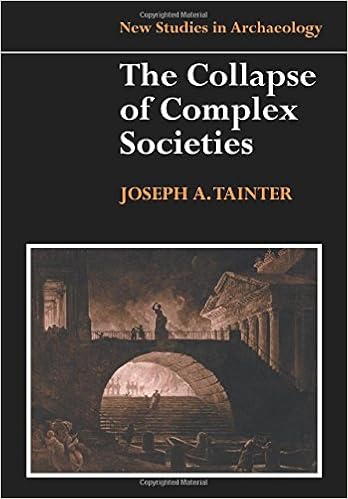
Collapse of Complex Societies 1ed (New Studies in Archaeology)

Collapse of Complex Societies 1ed (New Studies in Archaeology)


Collapse of Complex Societies 1ed (New Studies in Archaeology)


Download Collapse of Complex Societies 1ed (New Studies in Archaeology)

Now present! A publication that will certainly offer fantastic influences for you! A publication has large amounts with the daily condition around. This publication is a publication that has been created by an experienced author. For the result, the author actually has great lead to attract the readers. It triggers the title of this book is additionally so intriguing. Collapse Of Complex Societies 1ed (New Studies In Archaeology) is this publication title.

Locate your personal web page to be conformed to just what your necessity is. But, do not forget. It is a great publication. You can discover it as one of one of the most recommended publication in this day. When you have actually located as well as got it, do not just take for the specific page. All pages concern with useful as well as vital information. It will certainly influence you how to obtain the best thing while analysis.

As the various other book will offer, besides the new lesson it will likewise enhance the perception and also motivations associated with this subject. We're truly certain that your selection to choose as reading publication will be not wrong. It assumes that the existence of the book will certainly enhance this world's literary collections. When many people look for this subject for guide analysis, it will certainly become the one that influence you to make brand-new motivations.

For even more interesting reason, you may unknown regarding the material of this publication, may you? Why do not you attempt to comprehend? Comprehending brand-new thing will lead to conceptualize the life better. You could not just check out as the tasks, yet analysis can be a way making your life run well. By this Collapse Of Complex Societies 1ed (New Studies In Archaeology) you can actually think of just how the life will certainly be and also should be.

Collapse of Complex Societies 1ed (New Studies in Archaeology)

Review

"While the theoretical part of the book is quite remarkable and based on exceptional erudition, I also found the accumulation of the supporting data to be interesting reading . . . The merit of the book is that it is interesting. It modifies some of our views about early states and their collapse mainly by using data. It also shows how archaeology in alliance with social sciences opens the way for a comparative analysis of change in political and other cultural institutions." European Cultural Heritage"Tainter's is an attractive and compelling thesis of a genre which is nearly extinct among domestic historians." History Today"This is a lucid and stimulating book. Tainter does provide a framework for organizing and evaluating the evidence of collapse. One of the strengths of his framework is the broadness of its terms of reference...Tainter's model accomodates all levels of complexity and all kinds of evidence, from fiscal policy to the acquisition of raw materials. It deserves to be widely read." Antiquity"Tainter has provided copious grist for the intellectual mill in this remarkable piece of scholarship. The breadth of its coverage is given order by a model that qualifies, I believe, as one of the covering laws archaeologists have sought. In addition, Old World and New World scholars alike can profit from a reading of this book." P. Nick Kardulias, American Journal of Archaeology"The Collapse of Complex Societies contains much useful historical and archeological information on empires that have abruptly disappeared." James B. Rule, SUNY, Stony Brook, in Population and Environment"The book is thought-provoking, engaging, and often witty, and well illustrates the relevancy of classical antiquity to contemporary concerns." Classical World

Read more

Book Description

Twenty-four examples of societal collapse help develop a new theory to account for their breakdown. Detailed studies of the Roman, Mayan and Cacoan collapses clarify the processes of disintegration.

Read more

Product details

Series: New Studies in Archaeology

Paperback: 264 pages

Publisher: Cambridge University Press; Reprint edition (March 30, 1990)

Language: English

ISBN-10: 052138673X

ISBN-13: 978-0521386739

Product Dimensions:

6.7 x 0.6 x 9.6 inches

Shipping Weight: 1.2 pounds (View shipping rates and policies)

Average Customer Review:

4.2 out of 5 stars

71 customer reviews

Amazon Best Sellers Rank:

#114,902 in Books (See Top 100 in Books)

In the middle part of the twentieth century, before "The Walking Dead," the historiography of civilizational collapse was dominated by Arnold Toynbee’s multi-volume "A Study of History," with his “challenge and response” dynamic. Before that, stretching back into the nineteenth century, other analyses analogized the lives of civilizations to the lives of humans, most notably in Oswald Spengler’s enormously influential "The Decline of the West," published in 1918. And many other writers over many centuries have, in different ways, examined why civilizations fail, the classic early modern example being Edward Gibbon’s analysis of Rome. Joseph Tainter arrived in 1988, with this book, to offer an alternative—namely, total economic determinism filtered through a framework of his own devising. Not a very successful framework, to be sure, but at least one that provides some food for thought.Tainter is an anthropologist, so he views history though that prism. Moreover, "he Collapse of Complex Societies" is an academic monograph, so it has all the defects of that genre. Nobody would call the writing spicy, although there are flashes of humor. The author deliberately frequently summarizes and repeats, even though this is a short book, and he constantly cites other equally boring academics for minor points. Thus, we learn a great deal about the state of anthropological (and archaeological) knowledge as of thirty years ago. But, since this is a narrow anthropological analysis, we are denied any substantial linking of that knowledge to history, of which Tainter seems under-informed at best.He probably wouldn’t disagree, or rather, he would say that most history is irrelevant, if not bunk. For Tainter, if it can’t be quantified, it doesn’t exist. He has the soul of an economist trapped at the desk of an anthropologist. This is a minor strength and a major weakness of his book. It is a strength in that his hypothesis is somewhat testable, at least relative to a Toynbee-type analysis. It is a weakness in that it leads to a materialist reductio ad absurdum. Not for Tainter any belief in what Keynes called “animal spirits,” and not for Tainter any belief that any culture is superior in any way to any other. All cultures as culture are imprisoned in the iron framework that Tainter builds, subject to the inevitable pressure of econometrics. They are mere ephemera randomly associated with the purely material factors that are wholly determinative of the arc of every society in human history.Tainter begins, logically enough by defining “collapse.” He acknowledges that modern man, and early modern man, has been fascinated by collapse—for centuries by Rome’s collapse, and today by fears and premonitions of our own collapse, as the early modern belief in inevitable progress has eroded. Here Tainter unveils the variable that explains everything for him—complexity. He uses complexity as both a definitional marker for societies and as a yardstick for measuring their collapse. “A society has collapsed when it displays a rapid, significant loss of an established level of sociopolitical complexity.” Elements of complexity as thus defined include everything from centralized control to social stratification to acquisition of territory. This is unexceptional enough, in that it paints the definition with a broad enough brush that few would disagree. Nowhere, though, is complexity evaluated other than with respect to quantifiable variables—ones that, if they have not been quantified because of lack of data, could at least be quantified with the right data.Next Tainter applies this definition to capsule summaries of seventeen collapsed complex societies, from the Western Chou Empire to the Hohokam (who feature in Wallace Stegner’s "Mormon Country") to the Minoans to the Ik. (He paints the Ik, in Uganda, as an example of extreme collapse, alleging, for example, that children are abandoned by their mothers at age three and that sharing is nonexistent in the society. As with all fieldwork anthropological assessments that seem to contradict human nature, it appears that the researchers who drew this conclusion were fooled by their interlocutors, and it is now realized that Ik society is not nearly as dreadful as Tainter says—just like Margaret Mead was led around by the nose by her Samoan interlocutors while they laughed at her behind her back for being gullible.) In each summarized case, he briefly applies a few of his markers for collapse to a truncated history of the society, along with a short postscript about the society and geographical area, and concludes that most or all of his quantifiable markers characterize collapse, so his definition is correct.Naturally enough, the next topic to get the author’s focus is complexity itself, in the form of states, and how it develops from simpler modes of human existence. This is well trodden ground, from those like Francis Fukuyama who ascribe most development of complex societies to warfare to those with a more anarchist bent, like James C. Scott, who view complex societies as a dubious blessing resulting from changes in food production. Tainter groups theories into “conflict” and “integration” theories, with the former claiming that states resulted from individuals and groups subjugating others for their own benefit, and the latter claiming that states arose to benefit society as a whole. He boldly decides that both are partially right, and moves on, since, after all, what he cares about is complexity, not how we got there.Tainter proceeds to evaluate the study of collapse itself, with an eye to establishing himself as unique, and all predecessors as pretenders. The core of his objection to other analyses of collapse is that they too often revolve around “value judgments,” an epithet Tainter hurls around with wild abandon. He loathes any kind of non-quantifiable ranking that implies, for example, that sophisticated art, literary accomplishments, monumental architecture, or philosophy are characteristics of complex societies—that is, of civilizations. Similarly, he rejects as not wrong, but incoherent, the idea that civilized societies are superior to uncivilized societies. For Tainter the economic determinist, superiority is only superior when it is measurable, using a scale of which he approves, and all other superiority is a value judgment, and hence anathema. Therefore, he concludes that “A civilization is the cultural system of a complex society,” and “features that popularly define a civilized society—such as great traditions of art and writing—are [merely] epiphenomena or covariables of social, political, and economic complexity. Complexity calls these traditions into being, for such art and literature serve social and economic purposes and classes that exist only in complex settings.”Tainter then offers what purports to be a survey of all theories of collapse, separated into eleven in all. These include resource depletion, catastrophe, intruders, class conflict, and what he calls “mystical factors,” under which rubric he includes Toynbee, Spengler, Gibbon, and anything non-quantifiable. He evaluates, both in the abstract and by reference to one or more collapsed civilizations, and rejects, all of these theories, as either just wrong, or as insufficient and needing to be integrated into a more competent theory not yet advanced (no prize for guessing whose theory that is). Most of his focus, though, is on class conflict theories and mystical theories, both of which he attacks in scathing terms.On class conflict, he notes that since “exploitation is a normal cost of stratification” and “bad government is a normal cost of government,” so “if exploitation and misadministration are normal aspects of hierarchy, then it is difficult to see these as sources for the collapse of hierarchies.” Touché. On mystical theories, though, Tainter is less convincing. He complains that there are far too many incompatible theories of why virtue and morality, however defined, created or destroyed civilizations, citing, among others, Sallust, Machiavelli’s "Discourses on Livy," and Montesquieu’s "Considerations on the Causes of the Greatness of the Romans and their Decline," as well as more modern writers such as Henry Adams, and, of course, Spengler and Toynbee. He complains all these are “value-laden,” his ultimate censure, and calls them “murky,” “superficial,” “narrow,” and “hateful.” OK, then. At no point, though, does he make any effort to actually address any such theory; he bootstraps his disgust into a conclusion, in essence treating Toynbee as no better than an Aztec priest tearing the hearts out of sacrificial victims to appease Huitzilopochtli and ensure the rising of the Sun. Then he says “It seems almost unsporting to treat Spengler and Toynbee so severely,” having not treated them at all other than with insults, and supports his non-argument with ranting “Value judgments are another matter altogether. A scholar trained in anthropology learns early on that such valuations are scientifically inadmissible, detrimental to the cause of understanding, intellectual indefensible, and simply unfair. . . . Cultural relativity may be one of the most important contributions anthropology can make to the social and historical sciences, and to the public at large.” Preening himself on his importance and superior insight, but offering zero evidence or argument, he moves on.Now, perhaps, “mystical arguments” (a better term for which would be “virtue arguments”) are, as compared with deterministic, quantifiable arguments, like ships passing in the night, or like dark matter and baryonic matter, weakly interacting at best. But that does not mean that virtue arguments have nothing to offer. Any person with a deep knowledge of history (which Tainter very evidently lacks) knows that there is a tide in the affairs of men, that is purely qualitative yet is very real. Thus, Tainter, when discussing the Ottomans and their slow collapse, says of another scholar, “He simply stated that later Islam was not willing to learn from others, which clarifies nothing.” Quite the contrary—if true, it clarifies everything. It is just not quantifiable. This is not to say that what Tainter offers is wrong, but it is most definitely incomplete. Virtue cannot be quantified, and if it can be quantified it is not virtue, but that does not mean that virtue, as well as other intangible cultural characteristics, do not exist and are not critically important for the growth and decline of a civilization, or for the globe itself. (Kipling perhaps captured the role of moral virtues in civilizations best in "The Gods of the Copybook Headings") This is why purely economic theories for the Great Divergence are always miserably incomplete—they take no account of culture, which cannot be quantified, but is determinative of the course of a civilization. But for Tainter, culture does not exist, except as irrelevant “epiphenomena,” and this means that at best his book is weak.In any case, the rest of the book is devoted to developing Tainter’s economic model of collapse, which is in essence that as complexity increases, which it must as a society responds to challenges, because of diminishing returns, eventually a society cannot increase complexity without paying more for it than the marginal benefit received, and thus the society becomes unable to respond effectively to challenges, and it collapses to a lower level of complexity in order to become economically coherent again. The only way to put this off, according to Tainter, is to obtain some new “energy subsidy,” which can be anything from conquering new territory to actual energy in the form of fossil fuels (he thankfully does not mention nuclear fusion, which ever since I was a small child forty years ago I have been told is going to supply all our energy in twenty years).All this is pretty obvious, actually, just prettied up with graphs and attempts at quantification. Some of it is overly pessimistic—Tainter talks about how investing in energy production already (in 1988) offered sharply diminishing returns, but he neglects countervailing trends, such as the diminishing cost of light production (quantified by William Nordhaus in the 1990s). Tainter applies his diminishing marginal returns analysis broadly, to everything from agriculture to scientific progress. Then he applies it in detail to Rome (obsessively focusing, for some reason, on the debasement of coinage), the Classic Maya, and the Chaco Canyon culture (in today’s New Mexico), attempting to show that all traditional models of collapse are inadequate specifically for these three cultures and that his model of diminishing marginal return on investment explains their collapse satisfactorily. He concludes, as well, that the peoples of these collapsed societies were, on the whole, better off after the collapse, since collapse is an “economizing process,” and, after all, a collapsed society has “restore[d] the marginal return on organizational investment to a more favorable level.” (Tainter explicitly claims that no other society moves in on a collapsed society with the intent of sheer destruction, rather than getting an “energy subsidy,” ignoring counter-examples like the Mongols.) Along with James C. Scott in "Against the Grain," Tainter thinks that the costs of a complex society may simply exceed its benefits to the people in that society, who will therefore be better off at a less complex level of organization. A collapsed society has not failed to adapt; it has taken the best path available. Collapse is not synonymous with anarchy or a Hobbesian state of nature; it’s just another way of organizing, at least much of the time. We may listen to tunes on a reed flute rather than Bach, and die in our twenties, but at least our marginal returns on investing in complexity will be up!One gap in Tainter’s analysis is that his model does not address complex societies where problem-solving does not require increases in complexity. He nods vaguely in this direction when answering the anticipated criticism that he does not take into account possible equilibria, but only vaguely. Tainter’s model of complexity is that of a hierarchy, rather than a network, a distinction made much of in Niall Ferguson’s recent The Square and the Tower. Arguably this make sense, for all past complex societies have been strongly hierarchical in nature. However, there is a plausible argument that modern technology, as well as modern habits of thought, whatever their drawbacks may be, permit a society to be organized with dispersed problem solving by networks, which may, to some extent, be immune from diminishing returns. You don’t have to believe that crowdsourcing is a magic cure-all to think that the Hayekian model of the market could have more application than to just economics—that perhaps a complex society could still be decentralized and less hierarchical, in a way that, even if Tainter is right, new problems can be addressed without increases in complexity that necessarily experience diminishing returns. Sure, such a techno-libertarian paradise exists nowhere now (though maybe certain aspects of the Internet are a step in this direction), but as an alternative, it’s on offer in a way that’s new in human history.Finally, Tainter applies his model to today. He notes that the modern world is different, not in its possible non-hierarchical approach to complexity, but in that collapse can only occur in a power vacuum, where no competitor will move in immediately, and no such power vacuum exists in the modern world on any relevant scale. While trying not to be pessimistic, he rejects the idea that technology will substitute for (supposedly) necessary investments in increased complexity, so ever less profitable investments will continue to be required even over the objections of the masses, and concludes that if and when modern society collapses, it will take longer, but be global, because no power vacuum exists—until it does, on a universal scale. He’s probably right about that, but he’s wrong about the economic determinism, which is far too narrow a framework through which to evaluate the fabric of human societies.

This is an interesting book. First published in the late 80's, it warrants renewed attention nowadays in light of all the end-of-the world hysterias currently emanating from concerns over economic turmoil, religious strife, nuclear terrorism, viral epidemics, and climate change. Even if most of us don't believe the worst is yet upon us, it's hard not to worry with so many books and movies out there depicting post-industrial societies where humans are left with their animal needs and violent proclivities, but none of the protections afforded by modern civilization. Joseph Tainter, though, is no hysteric. He's a buttoned-down scholar without any apparent pre-conceived agenda and certainly no intent to sensationalize. He's actually a little boring, and casual readers expecting lurid thrills from this book are likely to put it down after the first few pages. Like other students of history over the years, he seems haunted by the fact that so many of the world's once-vibrant civilizations have vanished for no obvious reason. The tasks he's taken on to himself here are to (a) catalogue the major lost civilizations (b)summarize known facts surrounding their rise and fall (c) distill the academic literature regarding the causes of societal collapse down to a handful common theories, and (d) establish the framework for his own general theory. Since it's obvious from the start of the book that he's ultimately looking forward into dynamics that might one day lead to the demise of our own world, this book really grabs your attention once you begin to suspect he may know what he's talking about. Tainter starts with a brief survey of eighteen vanished civilizations around the world which provide the substance for his study. His professional discipline is archeology, and several of his societies are ones, like the Minoans and the Chacoans, about which archeology tells us everything we know, since they left no written records. For others, like the ancient Romans and China's Western Chou Empire, he intrudes onto historians' turf because the written record provides a key part of the story. In fact, his most comprehensive and interesting discussion is of the Romans. I got the impression that he may have developed his animating insights for this book through his study of Rome, since he manner in which he imposes them on the sketchier cases sounds a bit vague to me in places. Tainter is obviously not the first researcher to become fascinated by societal collapse. The phenomenon has spawned a whole genre of literature and a host of causal theories. He summarizes them all for us and groups them into eleven broad categories, including resource depletion, natural catastrophe, invasion, social dysfunction, random concatenation of events, and so forth. He points out that none of these are mutually exclusive and that all have something to offer. In the end, however, he pronounces the existing literature inadequate to the task of explaining how and why thriving civilizations eventually disappear. Hence the motivation for his study. He does point to economic theories, one of the eleven groups, as the one probably richest in explanatory possibilities. And with that observation he lays the groundwork for his own theory, which is based in economics but is capable of subsuming elements associated with the other frameworks. In getting to his subject, Tainter generally avoids the term 'civilization'. He prefers instead the more precise phrase 'complex society', by which he means a social system entailing elaborate division of labor and supporting management hierarchies, government and a robust military. He refers to resources devoted to these functions as the society's "investment in complexity". He then explains the "rise" of a society as the period during which investment in complexity is growing and people are enjoying returns on it in the form of growing wealth, culture and security. Or at least enough people are enjoying these things that social and political stability prevail. Golden ages then can be seen as sweet spots in history during which the benefits from complexity are growing and incentivising more investment in it, triggering virtuous circles. However, such a dynamic is inherently self-limiting and eventually self-destructive. Two phrases which Tainter borrows from economics are "marginal cost" and "marginal return". Eventually, the marginal returns from investment in complexity - meaning the returns currently available - inevitably level off and then decline, while the marginal costs stay the same or even increase. The only way central authorities can so on supporting such costs is through taxation or currency debasement, unsustainable measures in a system where benefits are perceived as declining. A system so weakened becomes vulnerable to popular revolt or invasion, or lacks the will and resources to overcome other disasters. Tainter describes, for example, how the "barbarians" who eventually overran the Roman Empire were in many cases welcomed and even assisted by the Empire's population, who increasingly saw themselves as benefitting little from Rome's "complexity", even as Rome's tax collectors became more predatory than ever. Like the good scholar he is, Tainter is cautious in his approach to his subject and modest in the claims he makes for his conclusions. His theory is rather fatalistic and seems to regard a society's collapse as pre-determined by its rise. He is an unusually good writer and casts his points generally in short, declarative sentences that are easy to follow. His ideas, however, are not so simple, and require careful study to absorb fully. The book is short - only 216 pages - but it took me a long time to finish. I found it well worth the effort, and recommend it to others interested in this subject matter.

A major focus of this book is the effect of the law of diminishing returns and how this can lead to the collapse of societies. The author deals mostly with Central America's pre-Columbian cultures but this law applies to just about everything, and for all time. The sequence: intensification - depletion (aka diminishing returns) - new technology/paradigm shift/more intensification - depletion etc. and finally collapse applied to agricultural intensification, depletion, then collapse of the Maya civilization, and may well impact modern ones as well. I gave a copy of this book to a friend who teaches university economics, and he felt that he had no choice but to incorporate this view in his curriculum.Score one for me...

The importance of this work by Joseph Tainter, to later discussions on collapse, cannot be overstated. Though written in the form of academic anthropology, its ideas are tremendously important to those outside the profession. No author who does not cite Tainter is worthy to pronounce on the subject of civilizational collapse.

Professor Joseph Tainter's book is amazing. It outlines why societies collapse and makes a very good case why America is headed down the same road Rome did before it collapsed.

It's an interesting study on complexity, its meaning and nature. The author makes a review of different theories of breakdown of societies and then, he tried to build his own proposal, with interesting outcomes. The theory is believable in relation to Western Roman Empire and Mayan States, but not with Chacoans. The most provocative idea is that complexity, by itself, it's not an advantage and, in some cases, can be the cause of breakdown. The idea of Tainter must be applied to other cases to see its usefulness.

Collapse of Complex Societies 1ed (New Studies in Archaeology) PDF
Collapse of Complex Societies 1ed (New Studies in Archaeology) EPub
Collapse of Complex Societies 1ed (New Studies in Archaeology) Doc
Collapse of Complex Societies 1ed (New Studies in Archaeology) iBooks
Collapse of Complex Societies 1ed (New Studies in Archaeology) rtf
Collapse of Complex Societies 1ed (New Studies in Archaeology) Mobipocket
Collapse of Complex Societies 1ed (New Studies in Archaeology) Kindle

Collapse of Complex Societies 1ed (New Studies in Archaeology) PDF

Collapse of Complex Societies 1ed (New Studies in Archaeology) PDF

Collapse of Complex Societies 1ed (New Studies in Archaeology) PDF